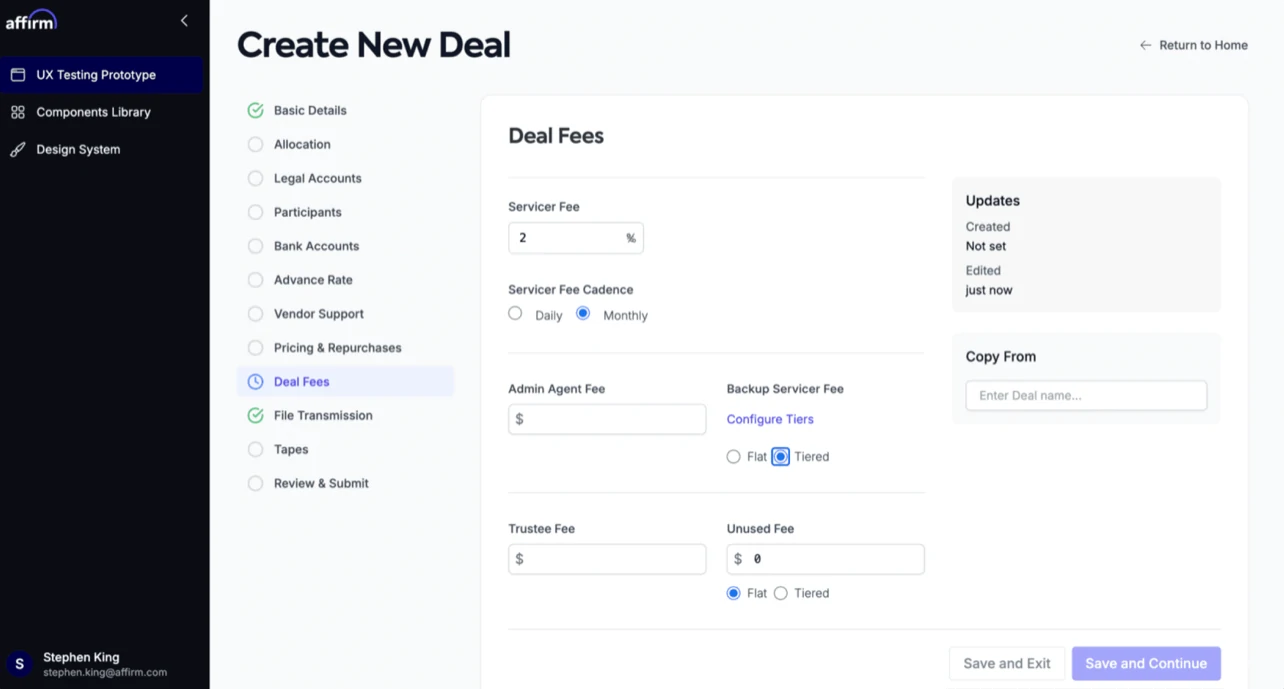
 Affirm | 2025

A self-service deal platform that cut routine updates from days to under 20 minutes.
Designing how AI agents embed into marketer workflows.
Product designer
(masters capstone)
3 fellow designers
Advised by Optimizely's VP of Product and a senior PM
7 months
(February - August 2026)
What it delivered
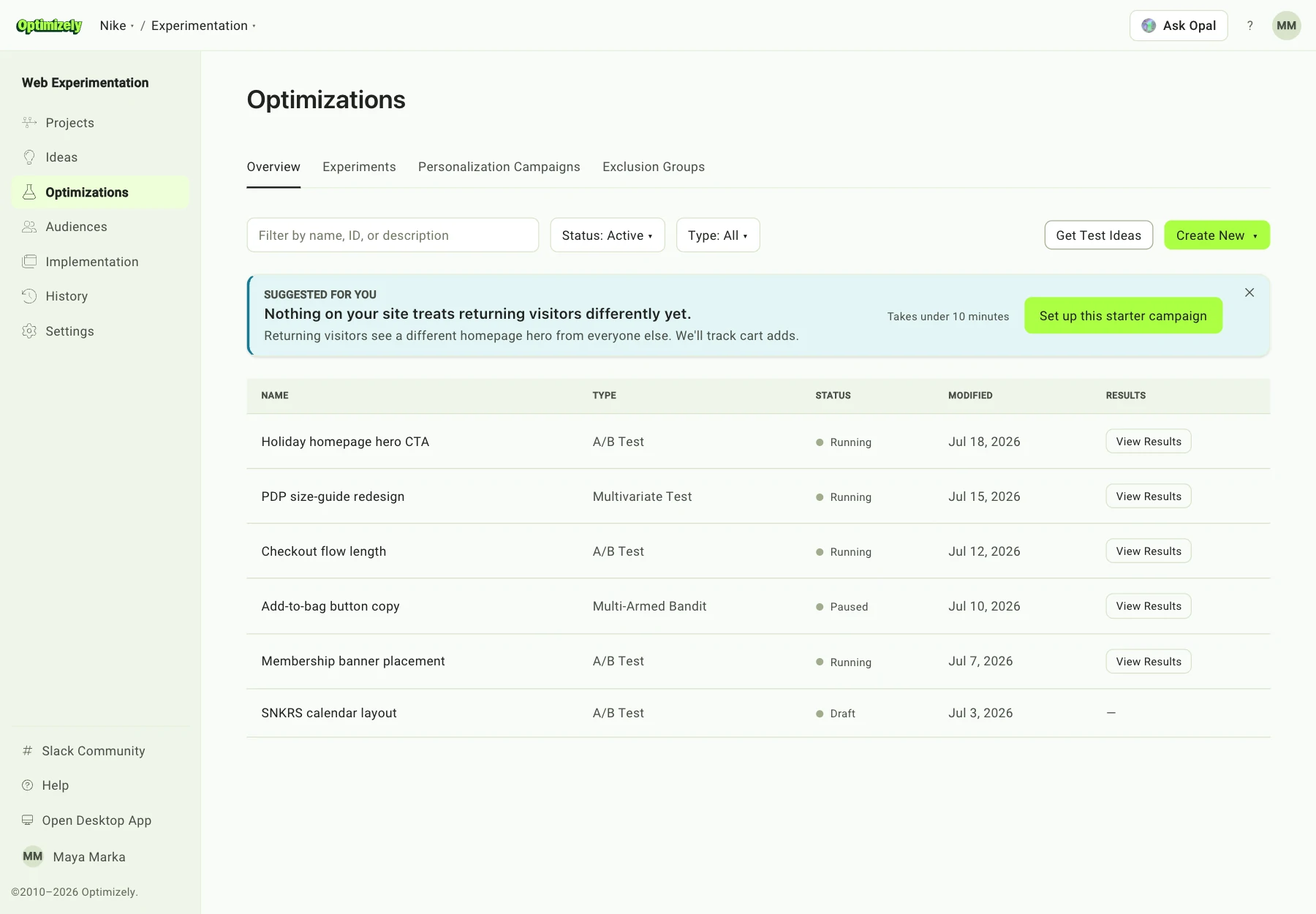
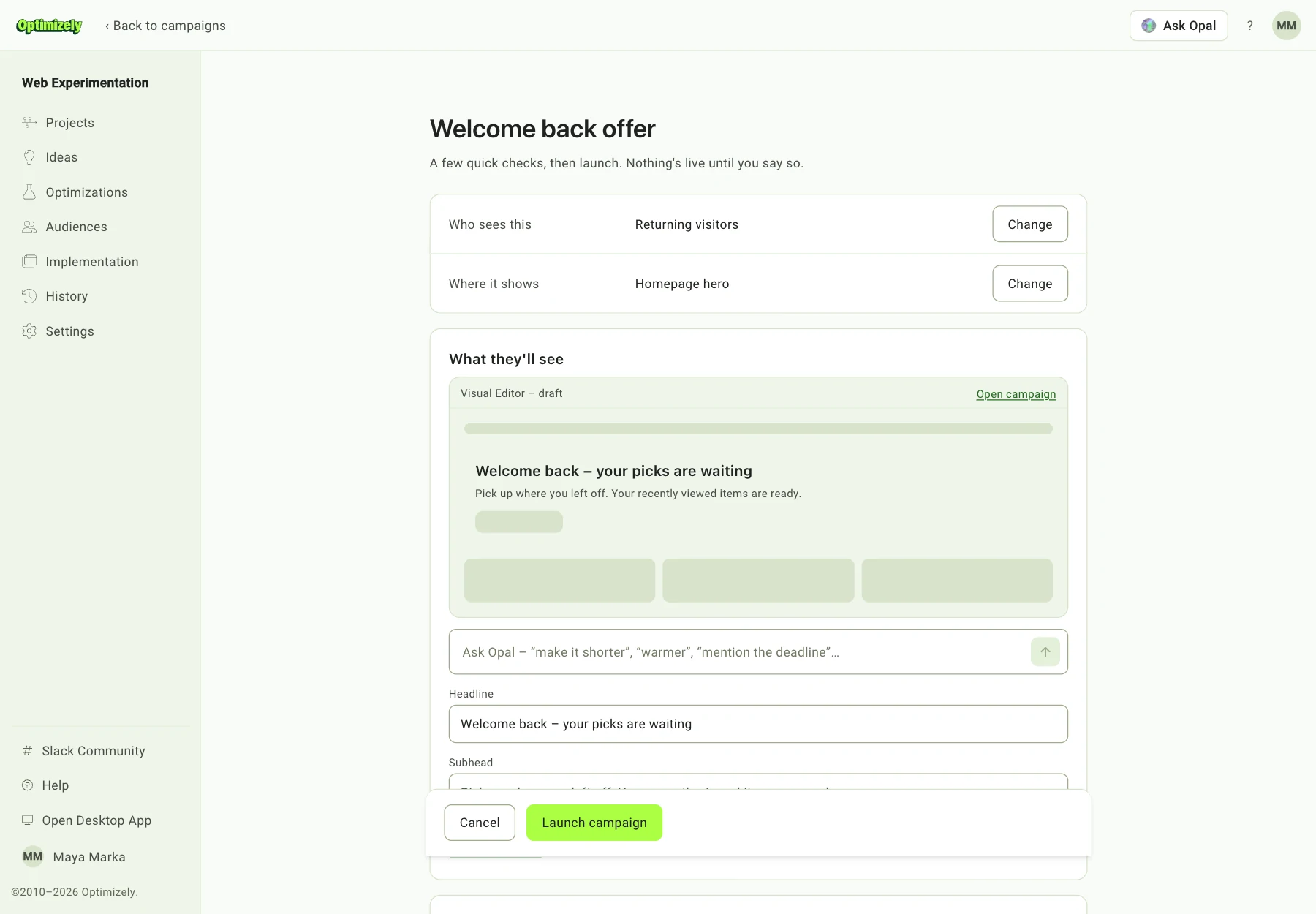
Opal suggests the first campaign instead of waiting to be asked.
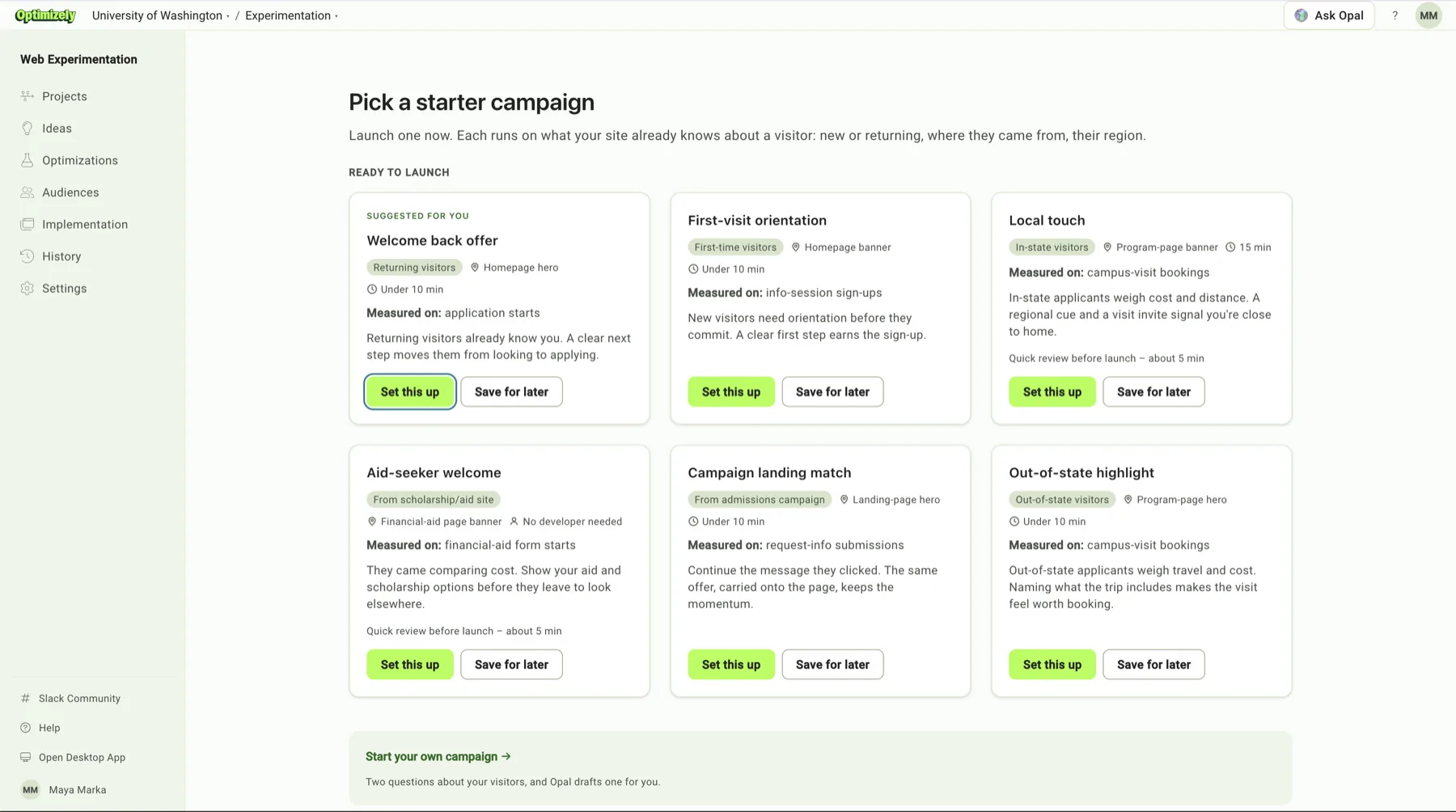
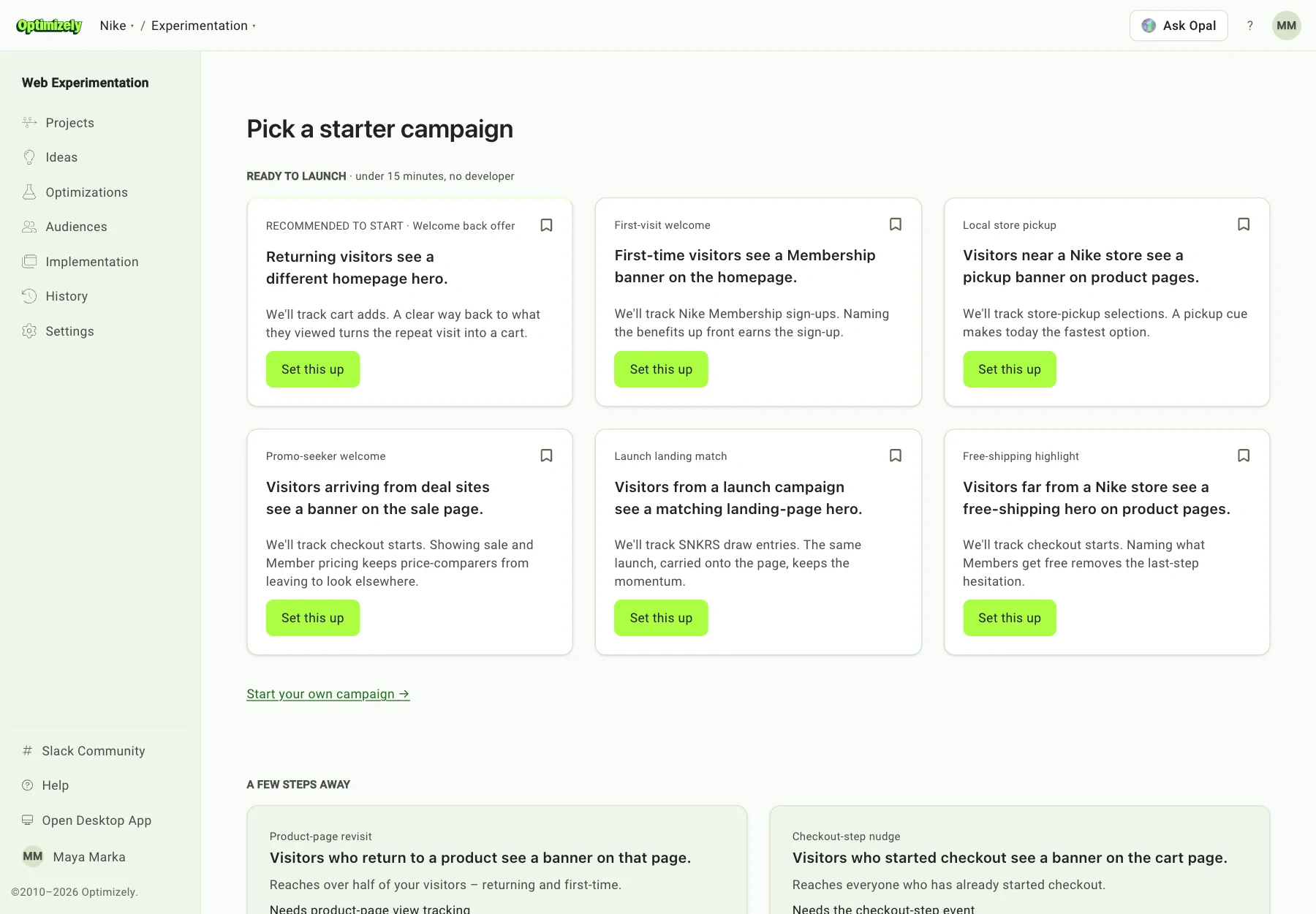
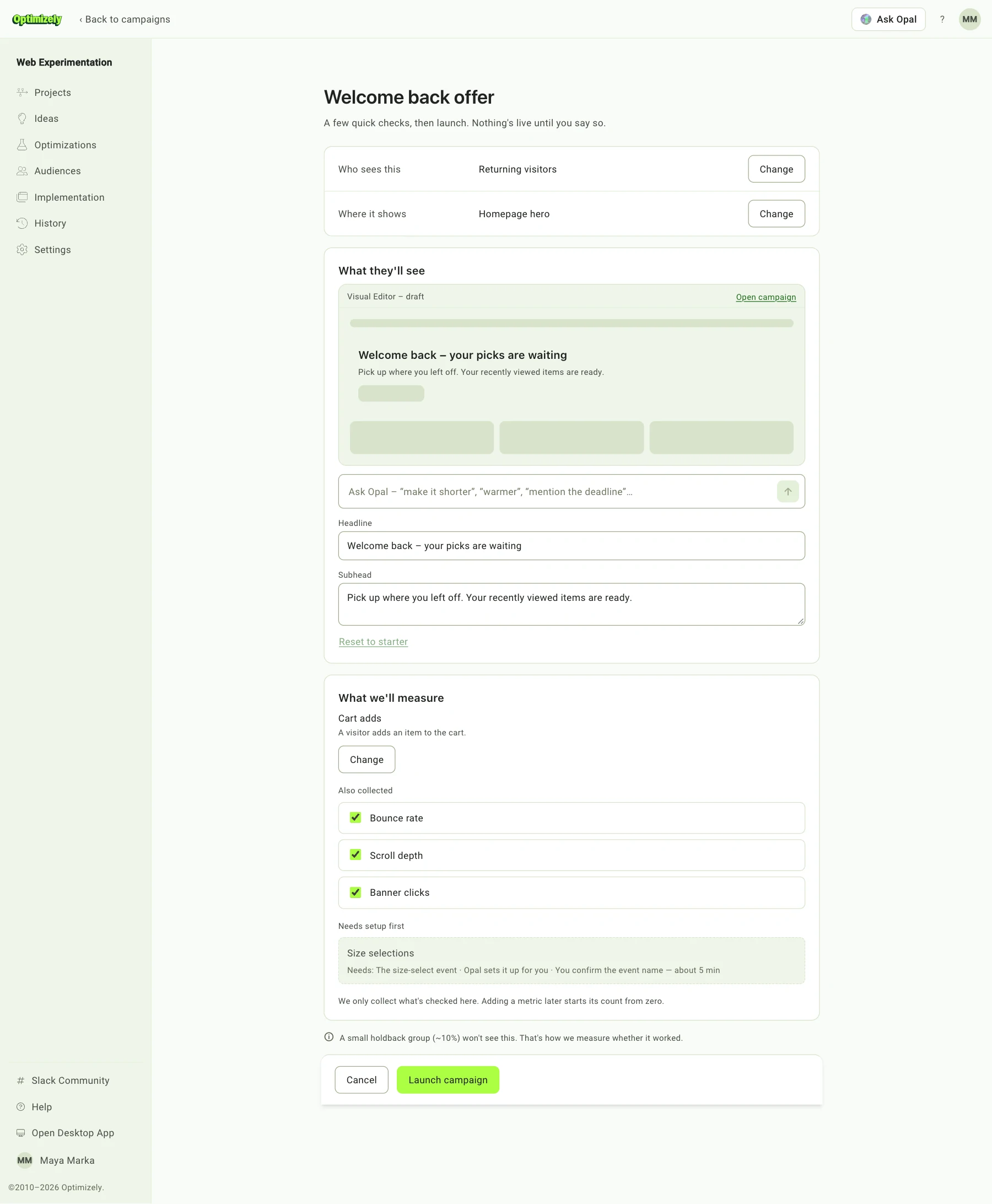
See The suggestionReady-made campaigns a marketer launches alone, in under 10 minutes.
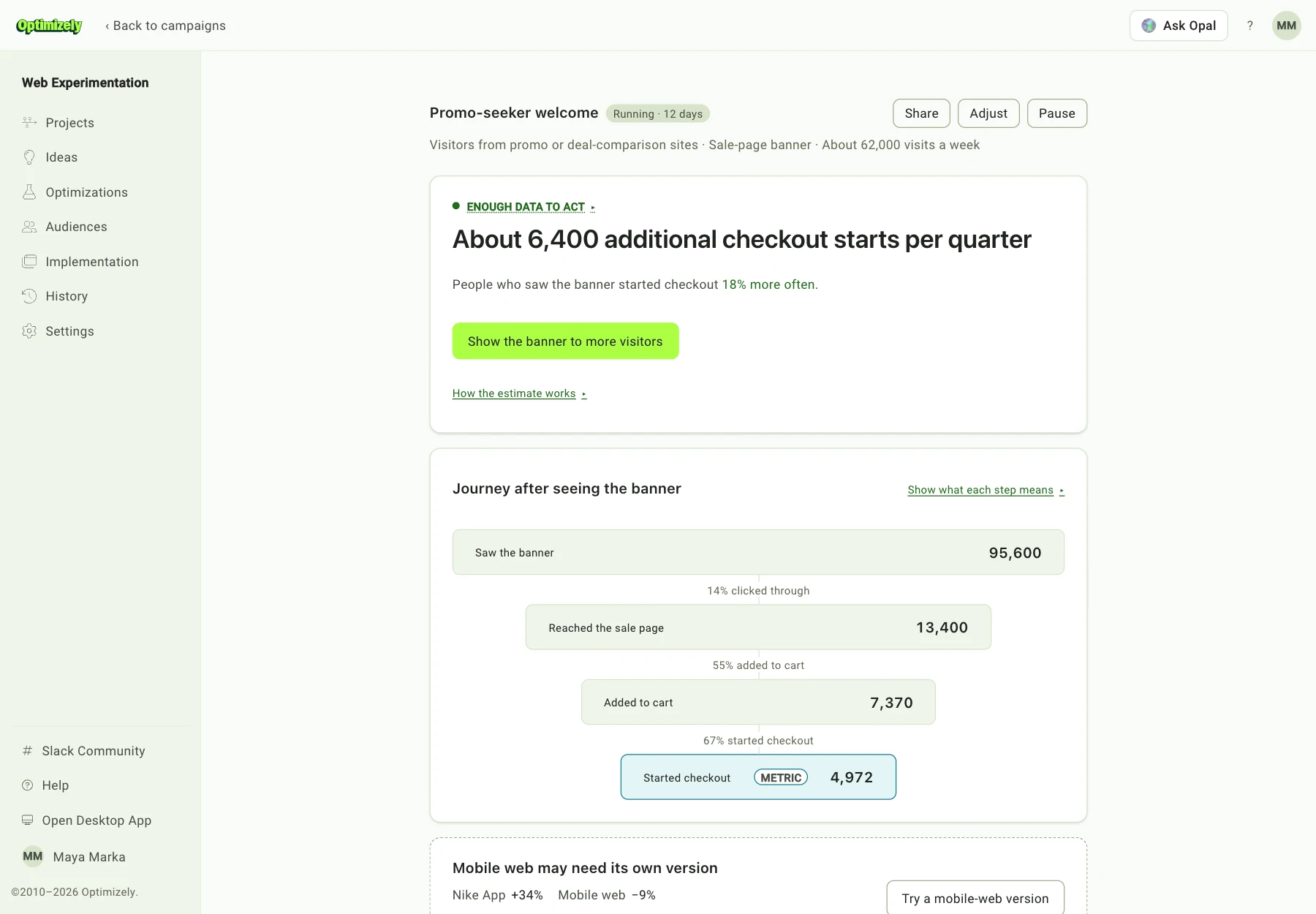
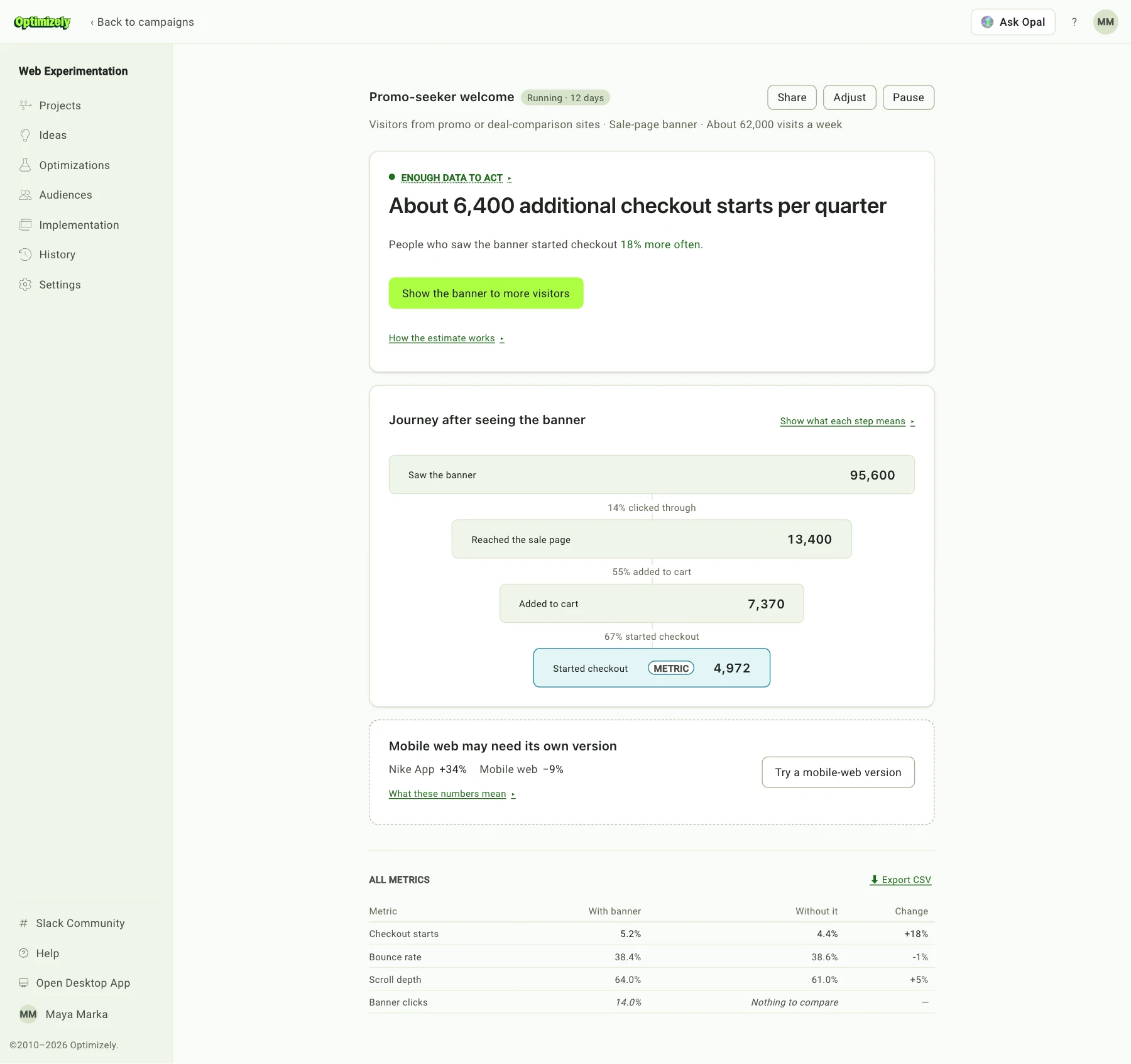
See Pick oneResults that say how sure they are before any number.
See Read the resultOptimizely makes software that companies use to test and tailor their websites. One feature, personalization, shows different visitors different things: a returning shopper sees a welcome-back offer, a first-timer sees an introduction.
Nearly every customer buys it. Of about 4,000 accounts, more than half had never run a single campaign, and one product manager put active use nearer 10 to 20 percent. Our capstone team was asked to design how Opal, Optimizely's AI assistant, could help. Nine interviews traced the gap to one handoff:
The person who buys it
The person who has to use it
Sold
A company's VP buys the promise: a site that adapts to each visitor.
Signed
The contract is signed. Her part is done.
Handed off
A marketer gets the tool, with no brief and no one who set it up.
Stalls hereSet up
Seven setup stages, and a developer, before anything shows on the site.
Stalls hereNever used
No campaign ever runs. The tool sits, then gets cancelled.
The person who buys it
Sold
A company's VP buys the promise: a site that adapts to each visitor.
Signed
The contract is signed. Her part is done.
The person who has to use it
Handed off
A marketer gets the tool, with no brief and no one who set it up.
Stalls hereSet up
Seven setup stages, and a developer, before anything shows on the site.
Stalls hereNever used
No campaign ever runs. The tool sits, then gets cancelled.
Nobody cancels because it failed. They cancel because nothing ever ran.
Only 10 or 20% of our customers who have personalization use it. They’re paying for it, and they’re just not using it.
Three rules the design follows, each one a fix for something we heard.
1. Suggest, don't ask
An empty chat box asks her to know what to type. A named suggestion only asks for a yes or no.
2. Only offer what she can finish today
If an idea would need a developer or an upgrade, it doesn't show up.
3. Say how sure it is
Results lead with plain words, early signs or enough to act, before any number.
Four moments, in the order the marketer meets them. Every screen runs on Optimizely's real interface.
In testing, both marketers launched a campaign unaided and read a flat result as a setup question, not a failure. Optimizely's VP of web experimentation asked for a PRD their engineering teams could pick up, so that became the handoff: a 22-section spec covering the user story, the screens, the seam between Opal and the existing product, the data each screen needs, guardrails, acceptance criteria and success metrics. The capstone closed with three presentations: to the public, to our professors and advisors, and to the advisors together with the Optimizely team.
Full research corpus, decision records and build are in a private repo. Happy to walk through it.
Affirm | 2025A self-service deal platform that cut routine updates from days to under 20 minutes.
 SuperWorks | 2022-2025
Brand identities, design systems, and hand-coded sites across three years of agency client work.